A Brief History
Headley is a small village high on the North Downs and the name comes from Hallega meaning a clearing in the heath. People have been in this area for probably 10,000 years or more with traces of Stone and Bronze Age occupation having been recorded just outside the Western boundary on Mickleham Downs by The Surrey Archaeological Society. Part of the North Western Boundary of the Parish is formed by the Roman Stane Street, this along with the documented remains in Walton mean that the Romans used this area extensively.
Headley is mentioned in The Doomsday Survey of 1086 and the Manor was owned byRalph de Felgeres. Previously the Manor had been held by Countess Goda the mother of King Harrold. Over the following years the Lordship of the Manor changed many times and a full and definitive list of the owners is not yet available. Around 1700 the Manor was ownedby the Stydolf family and this continued through various branches of the family until 1780 when it was sold to Henry Bolton of Thorncroft in Leatherhead. In 1804 the estate was bought by Robert Ladbrooke who kept the Manor House (Headley Park) and sold the estate to Richard Howard of Ashtead and the Howard family retained the Lordship until 1877 when it was sold to Henry Dudley Ryder of High Ashurst. He sold it on to the Crookendens, who in 1947 gave the remains of the estate and the title to the National Trust who remain the Lord of the Manor of Headley to this day.
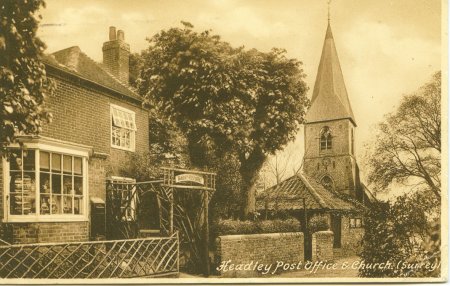
The first records of a church are around 1270 but a simple structure may well have existed before this. The West Tower was added much later. In the mid 1800’s the church became too small for the congregation and it was decided to commission the building of a new church just to the North of the old building and this was completed in 1858 and consecrated in 1860 by the Bishop of Winchester. Some of the remains of the old church were formed into a memorial to The Reverend Ferdinand Faithfull who was Rector at the time of the rebuilding near where the South Porch of the old building would have been. The New Church with its fine tall spire has become a landmark in the area and is often associated with Ranmore church on the other side of the Mole Gap as the churches of the North Downs.
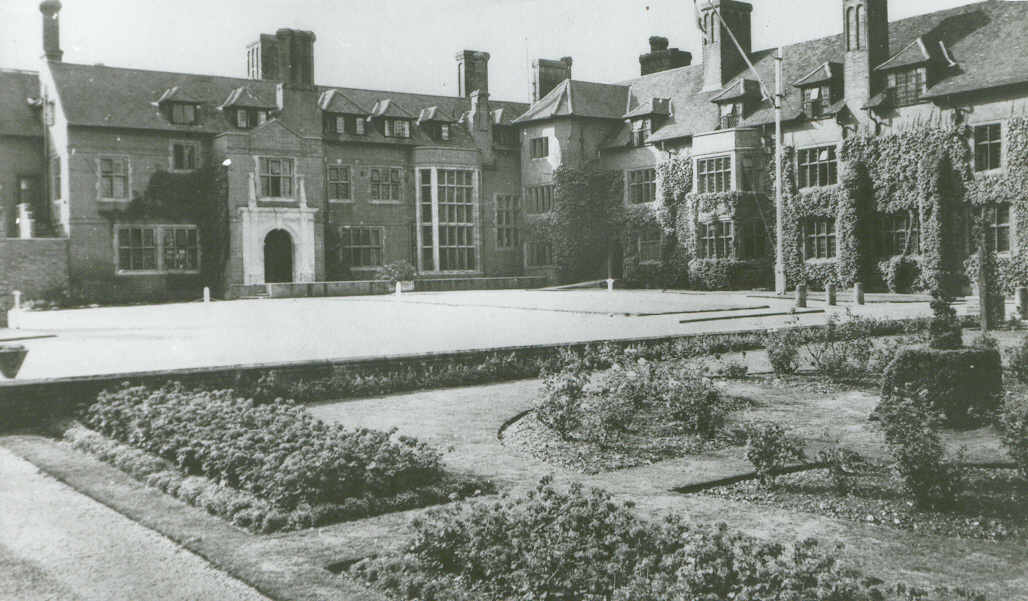
In more modern times Headley had several large houses and estates particularly Headley Park (then called Headley House) owned by the Ladbrooke family who had an involvement in the development of Ladbrooke Grove in London. In 1895 it was sold to the Mappins of Mappin and Webb the London Jewellers who commissioned additional building work but before the family could move in it was destroyed by fire in 1896 killing the Housekeeper. The house was rebuilt and lived in until WWII when it was requisitioned and lived in for some time by the Kennedy family who was the American Ambassador to Britain. After the war it was split into 5 houses and remains like that today. Headley Court was an Elizabethan
farm house bought by the Cunliffe family from Tyrells Wood and built into an imposing mansion Lord Cunliffe was Chairman of the Bank of England. During WWII it was used as the Headquarters for the Canadian Forces in Europe and since the war it has been used as an RAF and Joint Services rehabilitation centre. This service has now moved to new facilities in the midlands and there are proposals for Housing and a retirement complex on the site. Headley Grove has been owned by many famous people including Sir John Bridge the Metropolitan Chief Magistrate, Sir Malcolm Campbell of Bluebird fame, The Maharaja of Baroda, and Terry Thomas.
In the early part of the 20th century several smaller estates were built with large houses including Tumber, Great Hayes and The Manor House.
Today Headley is a commuter village with the farmland being mainly given over to horse pastures with many riding establishments occupying the old farm buildings. Headley is within the Metropolitan Green Belt and partly within the Surrey Hills AONB. This gives a great deal of protection to Headley and there has been little recent development.
Headley Heath and the Manorial Waste plus Oyster Hill Wood is owned and managed by the National Trust. Nower Wood is owned by the Surrey Wildlife Trust and the land to the West of Mill Way is managed as a private nature reserve ensuring the beautiful landscapeis very unlikely to be spoilt by development.